How to Digitize an Internal Audit Process?
An internal (or external) audit usually refers to an operation to check a process, an organisation or accounts against a given reference framework by a competent professional. Although it is traditionally carried out with a pen and paper, more and more sectors are now tending to digitalise it...
Why Conduct an Internal Audit?
Conducting an effective and relevant audit is a strategic point in the life of a company. Indeed, an audit ensures compliance with a standard across several elements (processes, financial statements, organization, etc.). An audit is therefore an expert assessment delivered by a qualified professional against a specific standard. Identifying deviations from that standard is essential for the company in order to determine its points of attention and areas for improvement.
Moreover, significant challenges are associated with the audit process. An audit helps detect anomalies and risks within the organizations it examines. In addition, certain standards can only be granted to a company after verification through an audit.

How to Conduct an Audit?
Part 1
Before conducting an audit, it is important to distinguish between the different types of audits and their objectives. The two main types are internal audits and external audits. These audits can then focus on different elements such as a process, a system, or even a product.
In all cases, an audit consists of a “systematic and methodical approach” that can be divided into three phases: Planning, Execution, and Reporting.
Part 2
During the Planning phase, the conditions under which the audit will take place are established, notably by answering the 5W questions (What? Why? Where? When? Who?). Once the planning stage is clearly defined, the audit can be carried out. This is the Execution phase.
At this stage, the auditor checks what needs to be audited against the reference framework. Once this stage is completed, the Reporting phase follows. This is the stage during which the auditor provides feedback on what has been observed.
Auditing in the Era of Industry 4.0
Auditing can be considered an essential tool in the implementation of a Lean approach since it supports a continuous improvement process (Kaizen). Thanks to this approach, it becomes easier to identify non-compliance issues in order to correct them.
With the aim of simplifying processes and saving time, internal audits are increasingly being digitized. There are several applications and templates available depending on what needs to be audited.
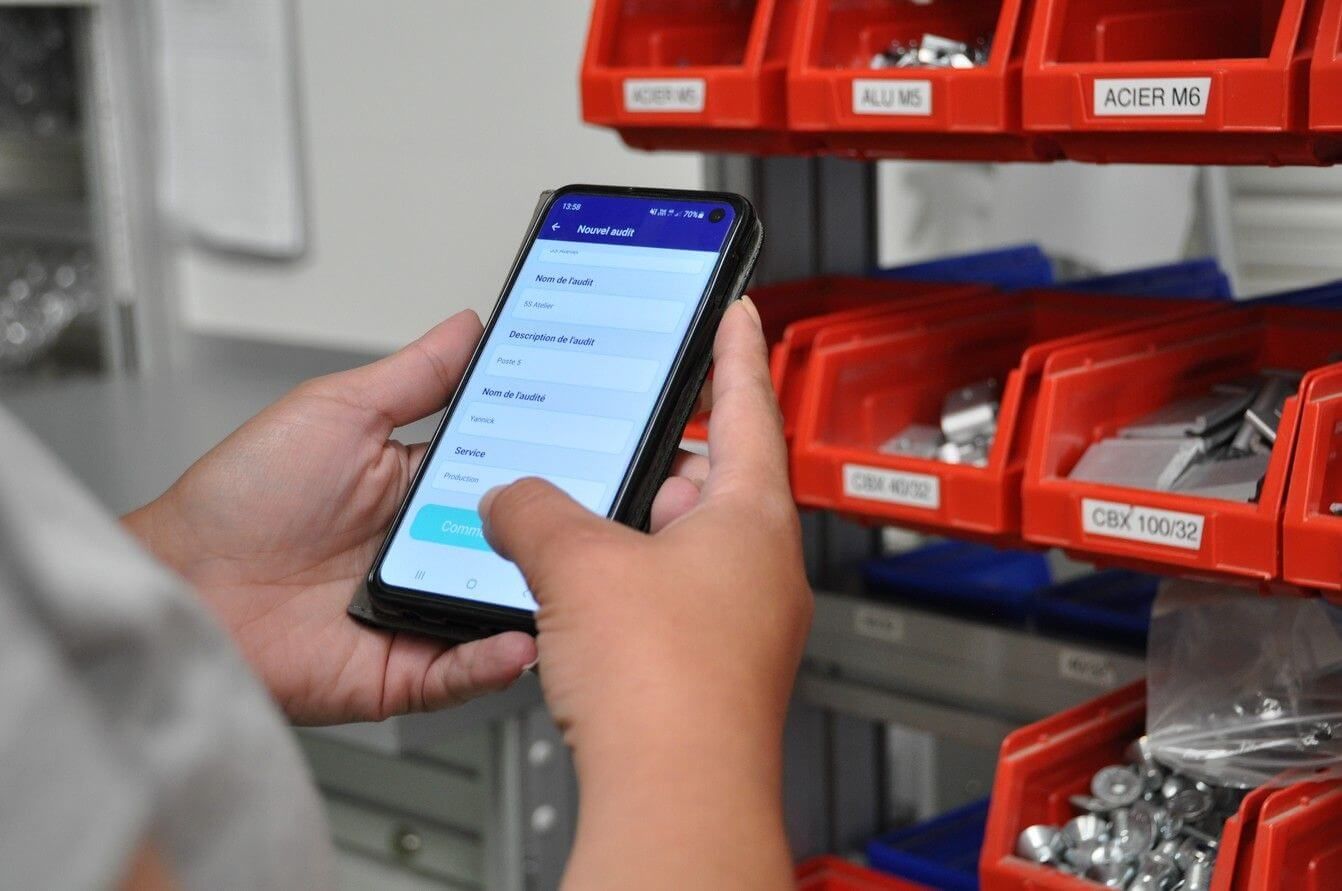
This is notably the case with the SESA CHECK application. Thanks to a simple and clean interface, the auditor selects the reference template for the audit and fills in the audit information such as the audited department, the name of the auditee, the date, etc. The application then generates the list of control points and the questions that need to be answered for the audit to proceed properly.
At the end of the audit, a report in PDF format can be generated and sent by email. During the next audit, it will then be necessary to check again the identified points of attention and verify whether all other points remain compliant. To learn more about SESA CHECK and its use in industry, you can consult our page dedicated to the SESA CHECK application.